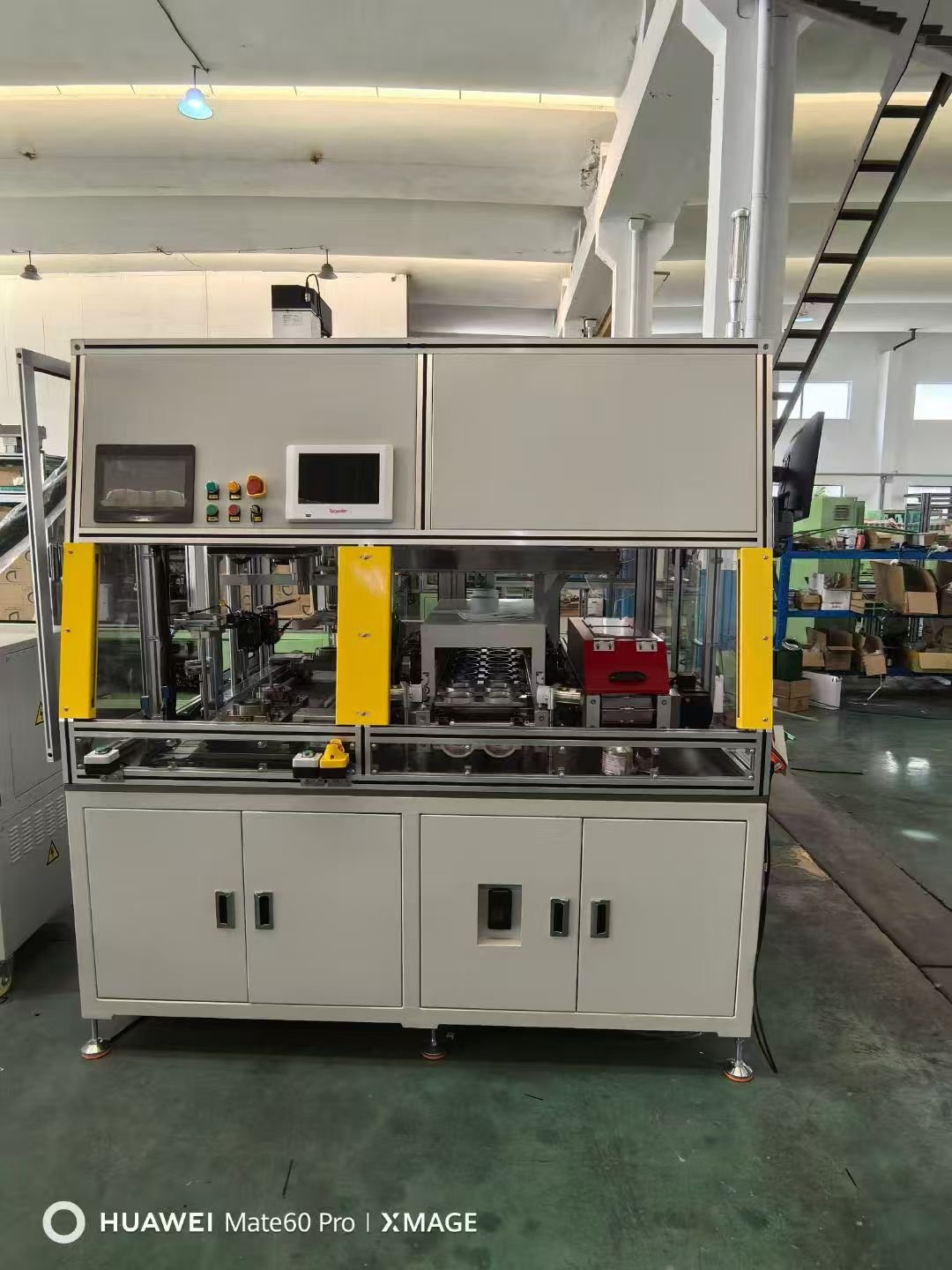
The manufacturing of brushless DC motors has changed significantly as industries demand smaller, more efficient and more dependable electric motors. BLDC motors are now found in a wide range of equipment, from electric mobility systems and cooling fans to pumps, robotics, power tools and automated machinery. Although the final motor may appear relatively simple from the outside, producing a reliable unit requires careful control at every stage of manufacturing.
One of the most important stages is stator winding. The copper wire must be placed accurately inside the stator slots according to the motor’s electrical design. The number of turns, wire arrangement, winding tension and positioning all contribute to the final characteristics of the motor. In high-volume production, achieving the same result repeatedly can be difficult when the process depends heavily on manual work.
This is why bldc motor winding machines are increasingly used in modern production environments. These machines are designed to automate the repetitive winding operation and provide greater control over important production parameters. Their purpose is not simply to increase output, but also to create a more consistent process that can be monitored, adjusted and repeated.
Understanding the Importance of Accurate BLDC Winding
The stator winding plays a central role in how a BLDC motor produces electromagnetic force. Copper conductors are positioned around the stator in a specific arrangement, allowing the electronic control system to energise the appropriate windings during operation. If the winding does not match the intended design, the motor may not deliver the expected electrical and mechanical characteristics.
Manual winding can introduce variation from one stator to another. An operator may have to control wire tension, guide the wire into the correct position and maintain the required number of turns while working at a practical production speed. Even experienced operators can find this difficult during long production runs because repetitive work can lead to inconsistencies.
Automated equipment provides a more controlled alternative. The machine can follow programmed winding parameters and repeat the same sequence across multiple components. This helps manufacturers establish a standardised process rather than depending entirely on individual operator technique.
Wire tension deserves particular attention. Copper wire needs to be guided smoothly without unnecessary stress. Inadequate tension can result in loose or poorly positioned turns, while excessive tension may affect the wire or its insulation. A controlled tension system can help maintain a more uniform winding condition throughout the production cycle.
The available space inside stator slots is also limited. Proper wire placement allows manufacturers to use that space efficiently while maintaining the required winding arrangement. A consistent winding pattern can make later assembly and testing more straightforward.
How Automated Equipment Supports Production
The biggest practical benefit of automated winding is repeatability. Once the machine has been correctly configured for a particular motor design, the same sequence can be applied repeatedly. This is especially useful for manufacturers producing large quantities of identical or closely related motor models.
BLDC motor winding machines can also reduce the amount of repetitive manual labour involved in production. Instead of continuously performing the winding operation by hand, operators can manage machine loading, setup, inspection and other tasks. This can make better use of skilled workers while allowing the equipment to handle repetitive operations.
Production speed can also improve, although the actual result depends on several factors. Stator design, wire diameter, number of turns, winding method, machine configuration and loading time can all influence productivity. A machine with a high winding speed is not necessarily the most suitable choice if setup or changeover takes too long.
For this reason, manufacturers should evaluate the entire production cycle. Loading and unloading, tooling changes, wire preparation, inspection and maintenance all form part of the real manufacturing process. A balanced system can be more useful than equipment that focuses on one performance figure.
Automated winding can also make production parameters easier to standardise. Different motor models may require different winding programmes, allowing operators to select the appropriate settings rather than manually recreating the process each time. This can reduce the possibility of setup mistakes when properly managed.
Choosing a Machine for the Right Application
There is no single winding machine that is ideal for every BLDC motor. Motor manufacturers work with different stator sizes, slot arrangements, wire specifications and winding patterns. Equipment therefore needs to be selected according to the actual production requirements.
The first consideration should be the motor design. Manufacturers should establish the stator dimensions, number of slots, winding configuration, number of turns and wire diameter before evaluating equipment. The machine must be capable of handling these specifications within its operating range.
Production quantity is another important factor. A manufacturer producing thousands of identical motors may prioritise automation and continuous operation, whereas a company making smaller batches may place greater importance on flexibility and fast changeovers.
Machine programming should also be considered. A straightforward control interface can help operators configure and verify winding parameters. The ability to store programmes for different motor designs can be particularly useful in factories that manufacture several product variants.
Tooling compatibility should not be overlooked. The winding head, guides and other components need to work correctly with the stator and wire being used. Proper tooling can have a direct impact on winding quality, so manufacturers should consider it as part of the complete machine solution rather than as an afterthought.
Maintenance requirements are equally important. Regular cleaning, inspection and replacement of wear components can help keep the winding process stable. A machine that is difficult to maintain may create unnecessary downtime even if its initial production specifications appear attractive.
Quality Control Still Matters
Automation can improve consistency, but it does not eliminate the need for inspection. A reliable BLDC manufacturing process combines controlled machinery with appropriate quality checks.
Before production begins, the copper wire should be inspected for visible damage and handled correctly throughout the machine. Wire guides and contact points should remain clean and properly adjusted. If the wire insulation becomes damaged during winding, the resulting stator may fail electrical testing or create reliability problems later.
The finished winding should be inspected for loose turns, uneven placement, damaged insulation and other visible defects. Electrical testing can then provide additional information about the condition of the winding. Depending on the motor design and manufacturer’s quality system, resistance, insulation and other relevant measurements may be checked.
Keeping production records can make quality management more effective. If operators record important settings and inspection results, engineers can compare batches and identify unusual changes. This can be particularly useful when investigating repeated defects or sudden changes in production performance.
Operator training also remains important. Even when a machine performs most of the winding automatically, someone still needs to understand machine setup, wire handling, fault conditions and basic maintenance. Proper training helps prevent simple mistakes from becoming repeated production problems.
Building a More Reliable Manufacturing Process
BLDC motor production involves more than the winding operation alone. Stator preparation, insulation, winding, connections, assembly and electrical testing all contribute to the final product. Winding equipment should therefore be considered as one part of a complete manufacturing system.
A well-configured winding machine can provide manufacturers with better control over a repetitive and technically important operation. It can help reduce variation, support consistent wire placement and make production parameters easier to reproduce. These advantages become particularly valuable when a company needs to manufacture the same motor design over a long production period.
At the same time, manufacturers should avoid treating automation as a replacement for engineering knowledge. Correct machine settings, suitable tooling, good-quality wire and regular maintenance are necessary to achieve dependable results. If these areas are neglected, even sophisticated equipment may produce inconsistent output.
The increasing use of BLDC motors means that manufacturers will continue to look for practical ways to improve their production processes. Flexible machinery, better process monitoring and more consistent winding techniques can help factories respond to this demand while maintaining appropriate quality standards.
Ultimately, bldc motor winding machines provide manufacturers with a controlled way to handle one of the most repetitive stages of motor production. When selected according to the motor design and integrated with proper quality procedures, they can support consistent winding, efficient production and easier process management. The most effective approach is not simply to pursue maximum speed, but to create a stable manufacturing process in which accuracy, repeatability and productivity work together.